Alma Soprano Titanium vs Traditional Laser & IPL: What the Research Actually Shows

If you've had laser hair removal before and found it uncomfortable, that's usually not you being sensitive. It's the technology. Most traditional lasers and IPL machines work by firing a single, high-energy pulse into the skin and hoping the cooling keeps up. Alma Soprano Titanium, the device we use across both our Prahran and Doncaster East clinics, works on a fundamentally different principle, and there's now over a decade of published research showing what that difference means for comfort, safety and results.
The core difference: how the two technologies actually work
Traditional diode, Alexandrite and Nd:YAG lasers (and IPL) typically deliver a high-fluence pulse in one hit, then move to the next spot. It's effective at damaging the hair follicle, but that single intense pulse is also what causes most of the pain, the risk of surface burns, and the extra caution needed on darker or tanned skin.
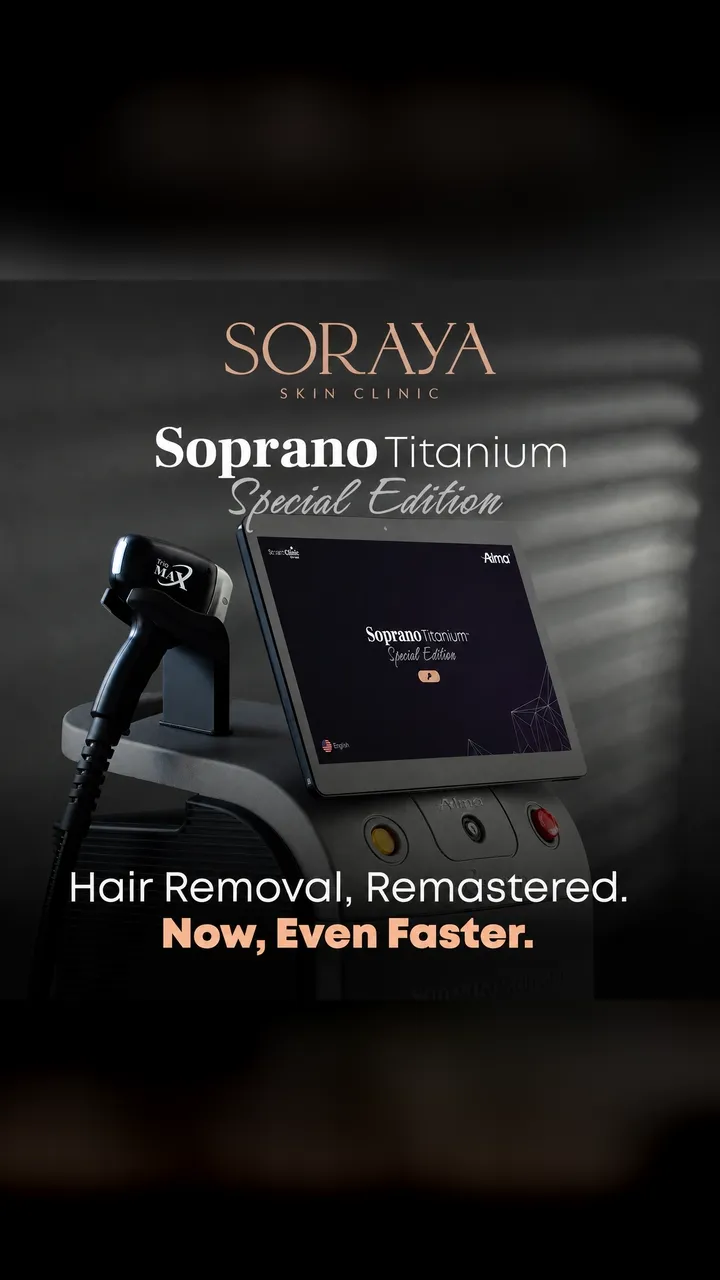
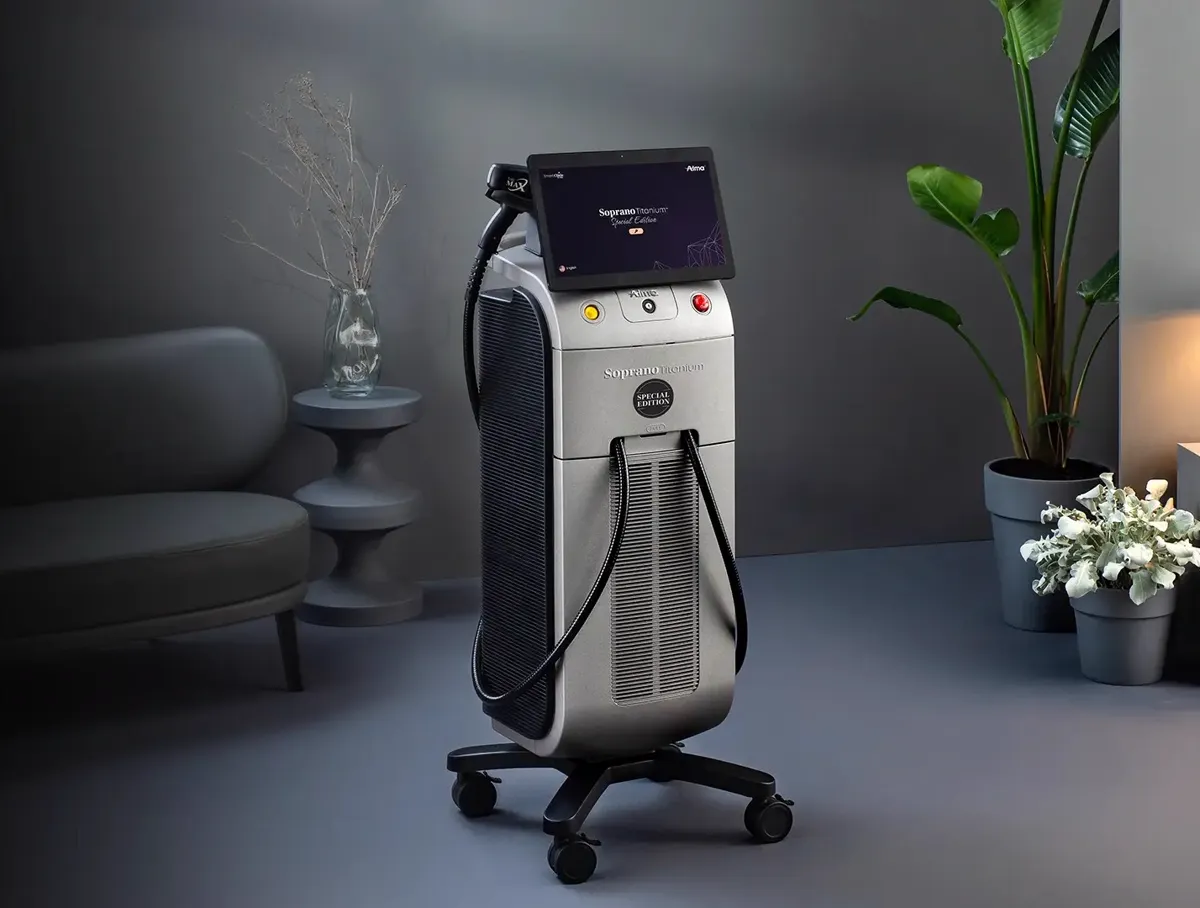
Soprano Titanium uses Alma's SHR (Super Hair Removal) technology instead: many low-fluence pulses delivered at a high repetition rate while the applicator moves continuously over the skin ("in-motion"), building heat gradually in the follicle rather than shocking the skin all at once. A sapphire contact tip (ICE Plus) cools the skin continuously throughout. Soprano Titanium also combines three wavelengths, 755nm, 810nm and 1064nm, in the one applicator, so it can target hair at different depths and structures without switching handpieces.
Considerably better tolerated, and there's data behind that, not just marketing
This is the part clients notice immediately, and it's also the part with the most published research behind it:
- A comparative study by Braun (2009) treated 25 patients across Fitzpatrick skin types I to V with both the SHR low-fluence, high-repetition-rate approach and a traditional high-fluence, low-repetition-rate 810nm diode laser. Both achieved comparable hair reduction (86 to 91% after five sessions), but the SHR approach was faster and associated with significantly less pain and a lower risk of side effects, particularly on darker skin types. Notably, one superficial burn occurred in the high-energy traditional group; none occurred with SHR.
- Trelles, Urdiales & Al-Zarouni (2010) examined what's actually happening in the follicle during low-fluence diode treatment and found it produces effective structural damage to the hair shaft and surrounding follicle, while remaining "well-tolerated, with minimal discomfort and side effects, especially for darker skin types."
- Paasch, Wagner & Paasch (2015) compared a low-fluence diode approach against a conventional scanned Alexandrite laser and reported 88.8% efficacy for the diode approach versus 77.7% for the traditional Alexandrite laser, with no severe adverse effects and reduced pain and discomfort during treatment.
The pattern across all three is consistent: gradual, low-fluence, continuously cooled heating gets comparable or better hair reduction with meaningfully less discomfort and a lower complication rate, especially for clients with darker skin tones, who carry the highest risk of burns, hyperpigmentation and scarring with traditional high-fluence lasers.
Safe across all skin types and tones, including tanned skin
Traditional lasers generally require clients to avoid sun exposure and often can't safely treat darker Fitzpatrick types at higher settings, because the single high-fluence pulse concentrates heat at the skin's surface as well as the follicle. Soprano Titanium's manufacturer, Alma, states the device is validated for all skin types (I to VI), including tanned skin, year-round, a direct consequence of the lower per-pulse energy and continuous cooling rather than a single aggressive pulse.
Efficacy holds up, it's not a trade-off
The understandable worry with anything described as "gentler" is that it must be less effective. The research above says otherwise: hair reduction outcomes with the SHR and low-fluence approach matched or beat traditional high-fluence lasers in every comparative study we found, typically over a course of 6 to 8 sessions. You're not trading results for comfort. You're getting both.
Faster, too
Because Soprano Titanium's in-motion technique covers ground continuously rather than pulsing and repositioning, treatment time is shorter. Independent research agency Sapio Research validated Soprano Titanium as the fastest hair removal treatment on the market when benchmarked against other leading laser hair removal brands.
It's why we chose Soprano Titanium for both our Prahran and Doncaster East clinics, and why it's the technology behind every laser hair removal package we offer. Book a free consultation to feel the difference for yourself.
References
- Braun M. Permanent laser hair removal with low fluence high repetition rate versus high fluence low repetition rate 810nm diode laser. 2009.
- Trelles MA, Urdiales F, Al-Zarouni M. Hair structures are effectively altered during 810nm diode laser hair epilation at low fluences. 2010.
- Paasch U, Wagner JA, Paasch HW. Novel 755nm diode laser vs. conventional 755nm scanned Alexandrite laser for hair removal. 2015.
- Sapio Research, independent speed benchmarking of Soprano Titanium vs. leading laser hair removal brands.
- Source summaries via Alma Lasers, "Efficacy and Safety with Soprano Laser Hair Removal": almalasers.co.uk
- Device specifications: almalasers.com/product/soprano-titanium-special-edition